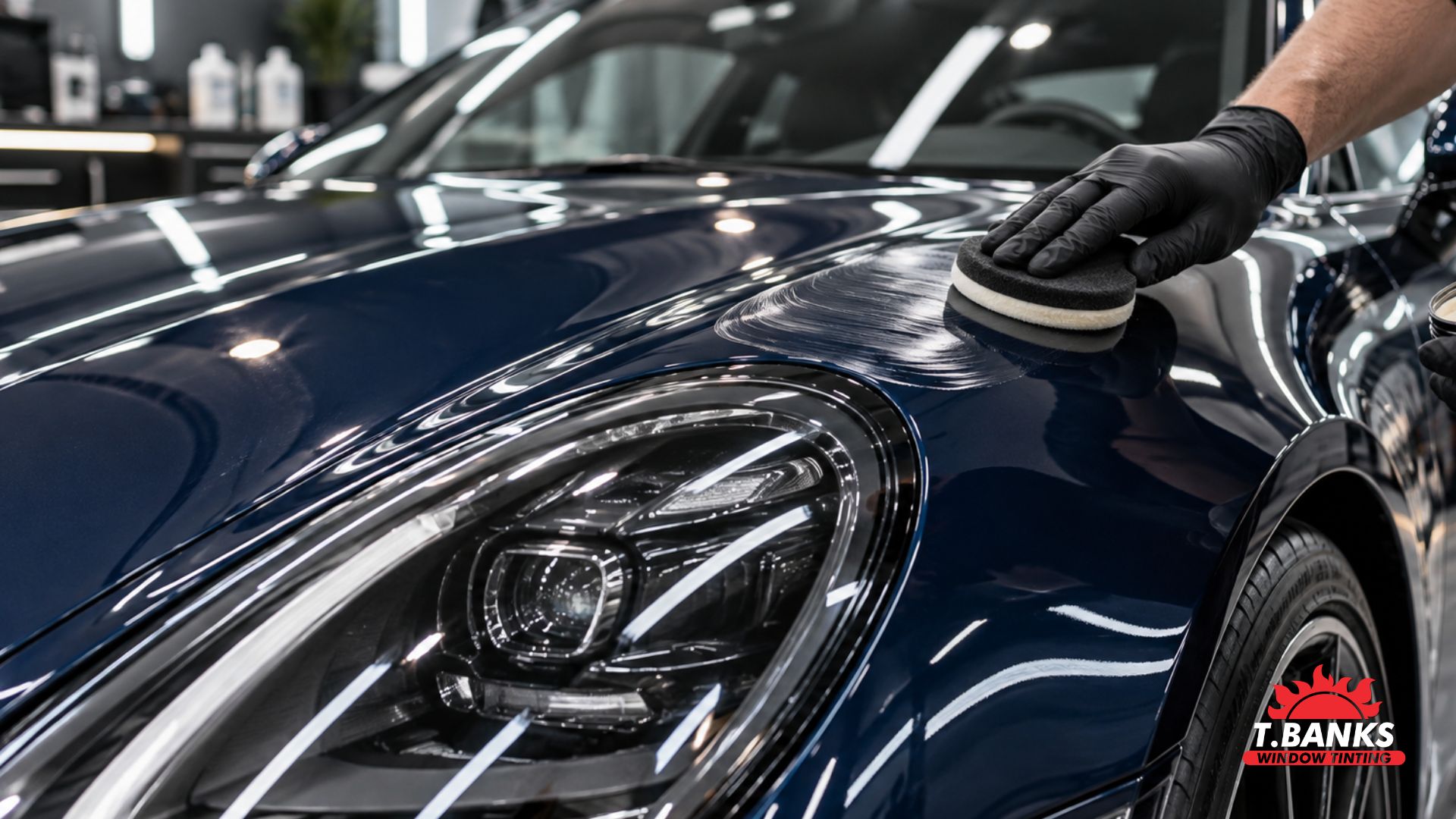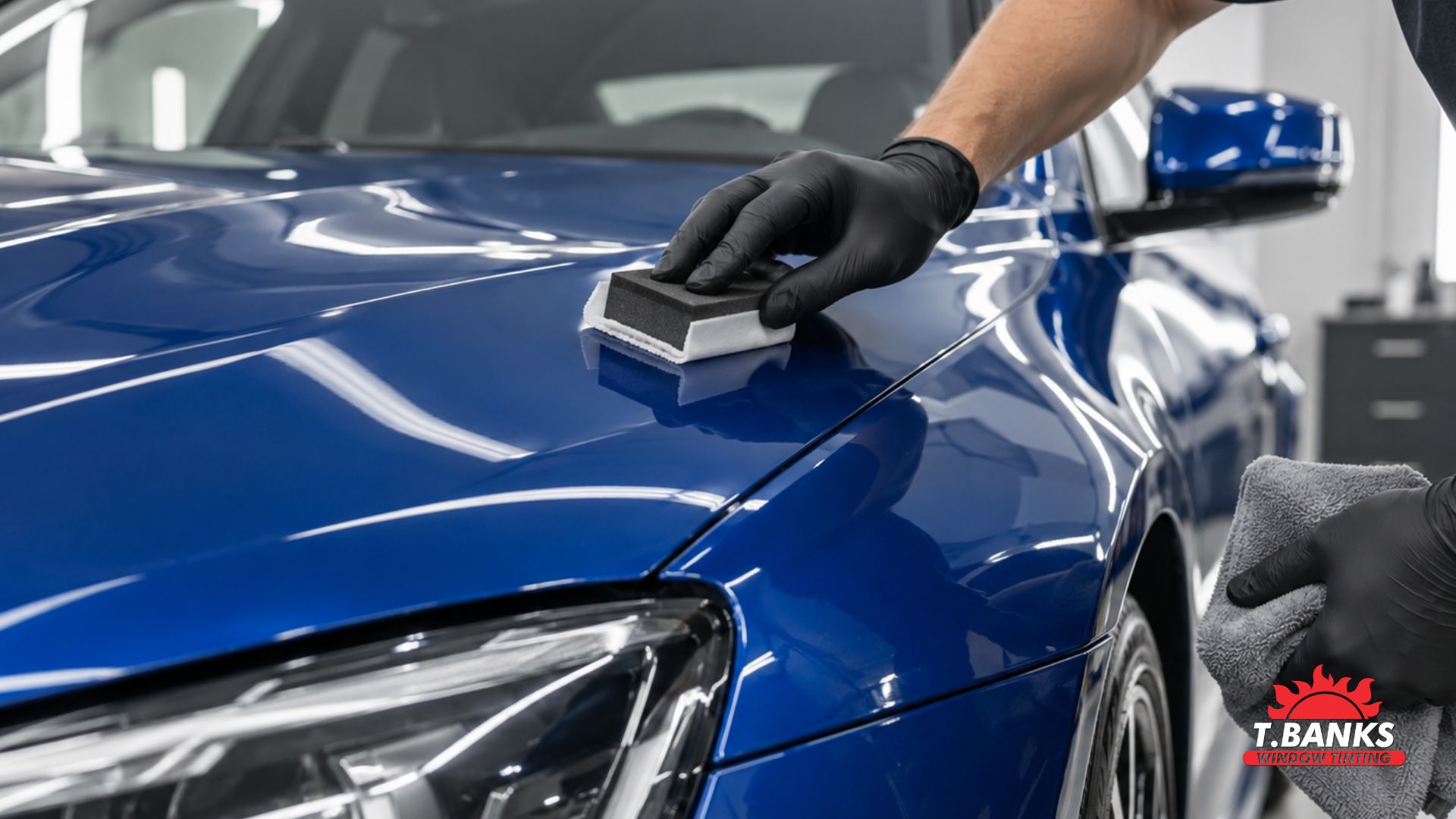
Ceramic coating does not make your car scratch-proof. What it can do is add a durable layer of protection that helps resist very light surface marring, environmental contamination, and certain chemical exposure while making the paint easier to maintain.
That distinction matters. Scratch resistance means the surface has an added layer that can reduce some minor marks under normal use. Scratch-proof would mean nothing could physically damage the paint, and no ceramic coating can make that claim. A sharp object, a tree branch, road debris, or improper washing can still leave visible damage.
What ceramic coating is really designed to do is preserve the finish by creating a slick, chemically resistant surface over the clear coat. Around Martinez, that added protection can be especially useful because vehicles deal with strong Georgia sun, seasonal pollen, insects, rain, and regular road exposure throughout the year.
A professional ceramic coating application is best viewed as a way to improve paint durability, gloss, and ease of maintenance. It contributes to scratch-resistant car protection, but it should never be confused with complete physical protection against every type of damage.
What Kind of Scratch Protection Does Ceramic Coating Provide?
Ceramic coating can help reduce some very light surface marring, but it cannot stop scratches that cut through the coating and into the clear coat. The level of protection is useful, but it is much more limited than many marketing claims make it sound.
Light wash-induced marks are one area where a coating can help indirectly. Because the coated surface is slicker and easier to clean, dirt tends to release more easily, which can reduce the amount of friction created during routine washing. That can support better ceramic coating scratch resistance over time.
Deeper damage is a different story. Keys, branches, shopping carts, gravel, and harder impacts can still penetrate the coating and reach the paint underneath. Even coatings advertised with high hardness ratings should not be interpreted as making the vehicle immune to scratches.
At T. Banks Window Tinting, we prefer to set realistic expectations about automotive ceramic coating. It is an excellent form of paint protection, but its real strength comes from helping the finish resist contamination and minor surface wear rather than acting like a physical shield against every impact.
What Does Ceramic Coating Actually Protect Your Paint Against?
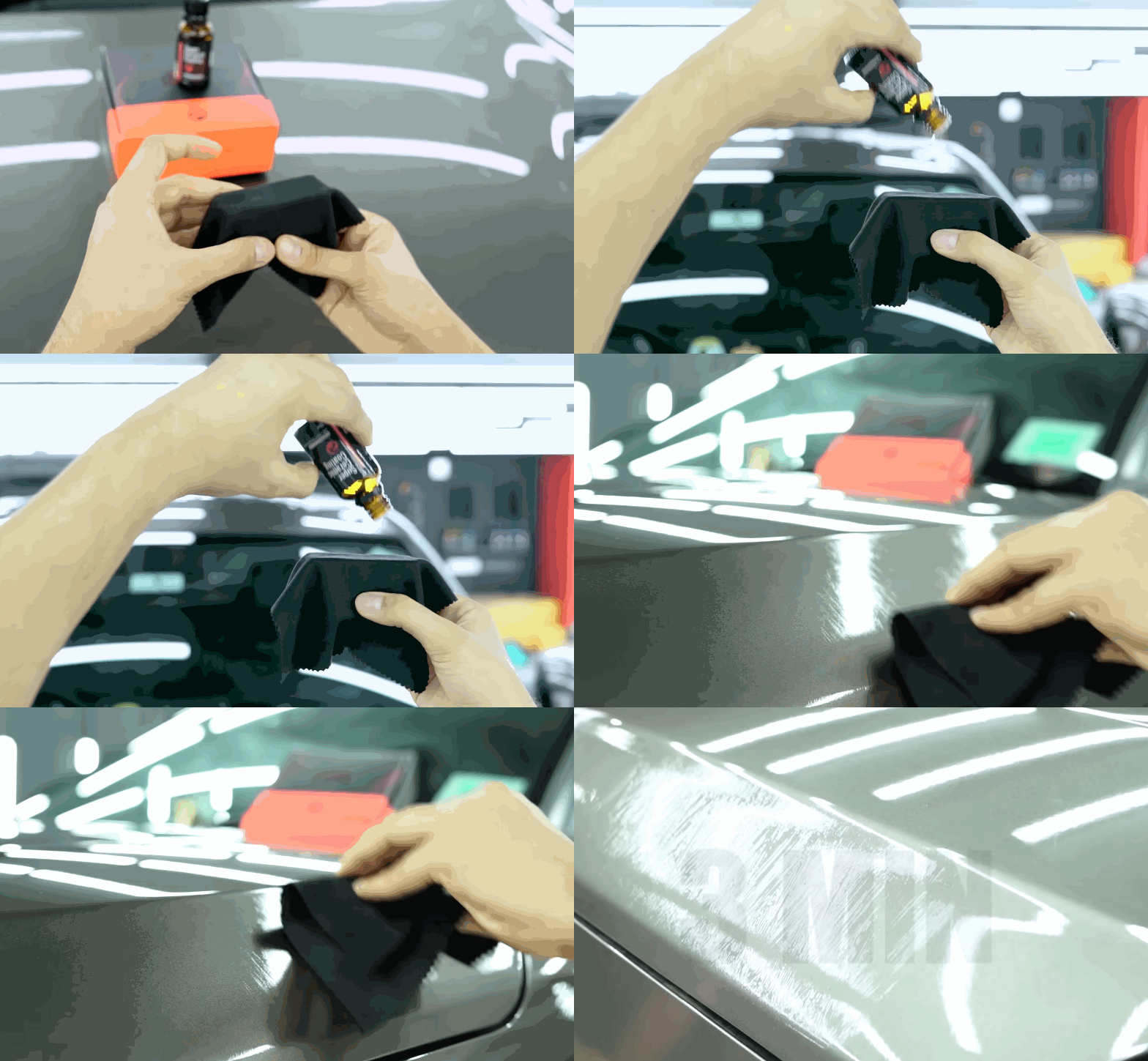
The biggest ceramic coating benefits are resistance to environmental contamination, easier cleaning, hydrophobic behavior, and added protection against UV and chemical exposure. Those are the areas where a quality coating earns its value day after day.
Georgia creates plenty of opportunities to put that protection to work. Heavy pollen can blanket vehicles during spring, insects collect quickly during warmer months, and bird droppings or tree sap can become difficult to remove when they sit on unprotected paint. Add road grime and intense sunlight, and the finish is constantly dealing with something.
A hydrophobic car coating helps water bead and move off the surface more easily, which also makes many contaminants less likely to bond aggressively to the paint. That means routine washing can require less scrubbing, and less scrubbing generally means less opportunity to introduce new marks.
The coating also contributes to UV paint protection and chemical resistance, helping support broader vehicle paint protection over time. That is where ceramic technology has its strongest advantage: not by making the paint indestructible, but by making everyday exposure easier to manage.
Why Washing Technique Still Matters After Ceramic Coating
A coated vehicle can still develop swirl marks when it is washed or dried incorrectly. Ceramic coating reduces some of the difficulty of cleaning, but it does not eliminate the need for careful maintenance.
- Use clean microfiber wash mitts and drying towels.
- Avoid automatic car washes that use abrasive rotating brushes.
- Rinse away heavy dirt before physically touching the paint.
- Use automotive soaps formulated for safe exterior cleaning.
- Keep towels, mitts, and wash tools free of trapped debris.
Good ceramic coating maintenance is mostly about reducing unnecessary friction. Dirt trapped in a towel or brush can still drag across the clear coat and create marks, even when a coating is present.
For owners trying to prevent swirl marks, proper safe car washing remains one of the most important habits. The coating makes maintenance easier, but careful technique is what helps preserve both the coating and the paint underneath.
Ceramic Coating vs. Paint Protection Film for Scratches
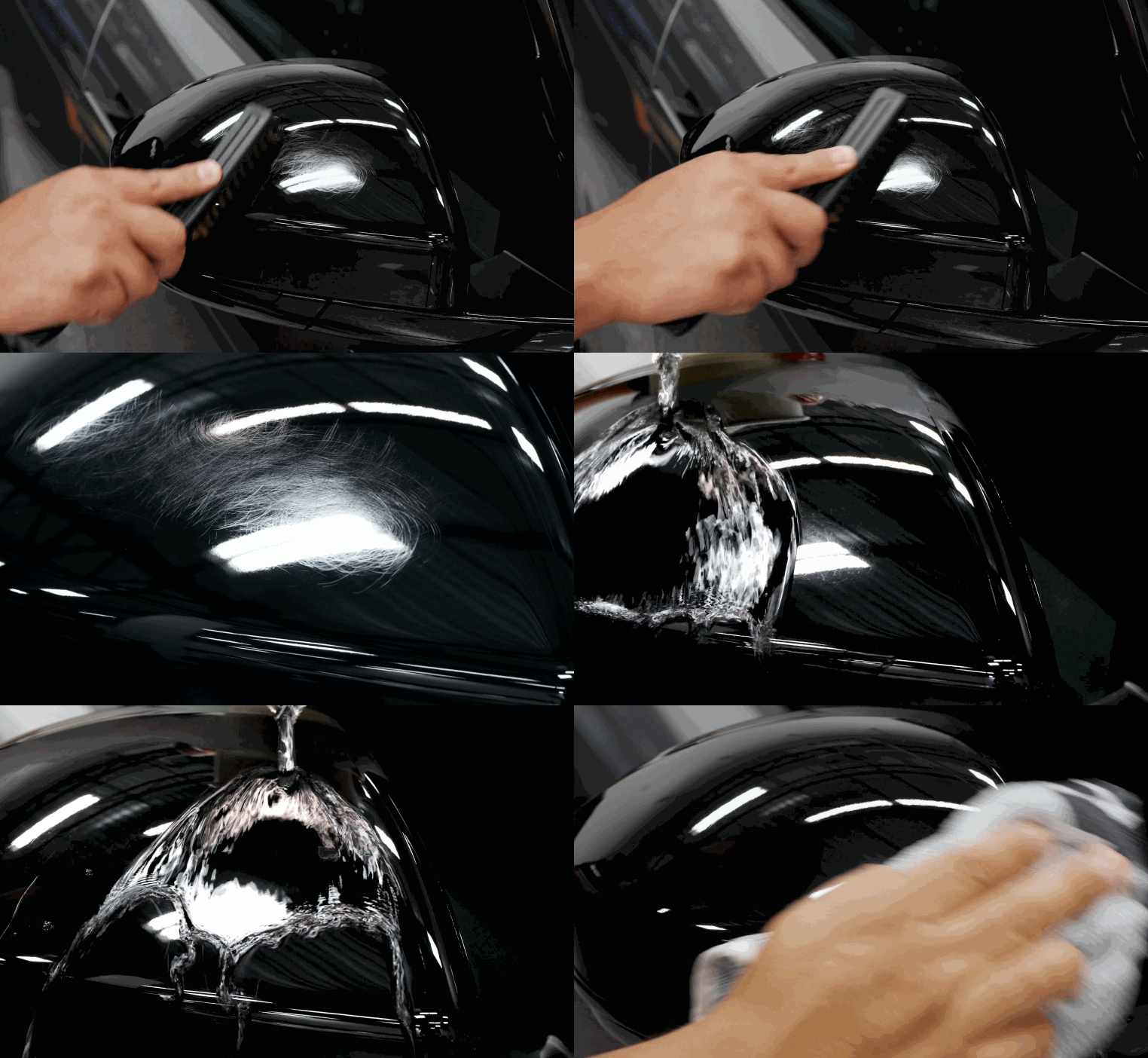
Paint Protection Film provides significantly more physical scratch and impact protection than ceramic coating.The two products solve different problems, so they should not be treated as interchangeable forms of protection.
Ceramic coating is a liquid product that cures into a thin protective layer. Its strengths are chemical resistance, hydrophobic performance, gloss, UV protection, and easier maintenance. Paint Protection Film is much thicker and creates a physical barrier between the paint and hazards such as rock chips, abrasions, and minor impacts.
That difference matters when comparing ceramic coating vs PPF. Someone primarily concerned about staining, maintenance, and gloss may get tremendous value from coating alone. A driver worried about front-end impacts or stronger scratch protection for cars may need PPF instead.
There is also no rule saying you have to choose one or the other. Some owners use PPF on high-impact areas and apply ceramic coating over the film and remaining painted surfaces. At T. Banks Window Tinting, we often look at the vehicle, driving habits, and protection goals before recommending an automotive paint protection strategy. Combining both products can make sense when the goal is broader protection rather than relying on one product to do everything.
How Professional Ceramic Coating Application Affects Performance
Proper preparation and application are essential for ceramic coating to bond correctly and deliver the durability, gloss, and protection it was designed to provide. The final result depends just as much on what happens before the coating touches the paint as it does on the product itself.
A professional process begins by inspecting the finish and identifying its current condition. The vehicle is then thoroughly washed and decontaminated to remove substances that ordinary washing can leave behind. When appropriate, paint correction can address swirl marks or other visible imperfections before they are effectively locked beneath the coating.
Once the paint preparation is complete, the surface needs to be clean and free of oils or residues that could interfere with bonding. The actual ceramic coating application also requires controlled placement, careful leveling, and adequate curing time. Rushing any of those stages can leave an inconsistent finish or reduce the coating’s durability.
At T. Banks Window Tinting, preparation is a major part of how we approach professional ceramic coating. Applying a premium product over contaminated or poorly prepared paint defeats the purpose. We want the surface underneath to be properly prepared so the coating has the best possible foundation for long-term performance.
Is Ceramic Coating Worth It for a Daily Driver in Martinez, GA?
Ceramic coating can be worthwhile for Martinez daily drivers who want easier maintenance, stronger environmental resistance, lasting gloss, and help preserving their paint condition. Its value becomes particularly noticeable when a vehicle spends a lot of time outdoors or accumulates substantial mileage.
A commute along Washington Road or River Watch Parkway exposes the vehicle to road grime, insects, and constant sunlight. Regular trips on I-20 between Martinez and Augusta add mileage and contamination, while outdoor parking means the paint continues facing Georgia sun and pollen even when the vehicle isn’t moving.
For a daily driver, the convenience factor matters. A coated surface generally releases dirt and contaminants more easily, making it simpler to keep the vehicle clean without aggressive washing. Over years of ownership, that supports long-term vehicle protection by reducing some of the environmental stress placed directly on the finish.
There are limits, though. Ceramic coating Martinez GA drivers choose should not be purchased as a substitute for impact protection. If rock chips, deeper scratches, and road debris are the primary concerns, Paint Protection Film is the more appropriate solution. For owners focused on practical daily driver paint protection against environmental exposure and easier upkeep, ceramic coating can be a very useful investment.
How Long Can Ceramic Coating Continue Protecting Your Car?
Ceramic coating lifespan varies according to the coating itself, paint preparation, application quality, driving frequency, storage conditions, and maintenance. A coating should never be treated as permanent or maintenance-free simply because it is designed for long-term protection.
One important detail is that performance doesn’t always disappear all at once. For example, a vehicle may stop producing the dramatic water beading it had shortly after installation because mineral deposits, road film, or other contamination has accumulated on the surface. That doesn’t automatically mean the coating is completely gone.
Maintenance Helps Reveal the Coating’s True Condition
Proper decontamination can sometimes restore hydrophobic behavior that appeared to be fading. Periodic inspections are also useful because they allow the condition of the surface to be evaluated instead of judging the coating solely by water behavior.
Good ceramic coating maintenance therefore serves two purposes: keeping the vehicle looking its best and helping the protective layer continue functioning effectively. Combined with appropriate washing and occasional professional inspection, it can support more consistent long-term paint protection throughout the coating’s service life.
Conclusion: Choose Ceramic Coating for the Protection It Actually Provides
Ceramic coating is worth choosing for the protection it genuinely provides, not because of the misconception that it makes automotive paint scratch-proof. Its real strengths are environmental resistance, easier cleaning, UV protection, enhanced gloss, and a surface that makes it harder for many contaminants to bond aggressively to the finish.
Getting those benefits requires more than buying a good coating. Proper paint preparation, careful application, adequate curing, and appropriate maintenance all contribute to the result. For drivers in Martinez, those factors become especially relevant because Georgia heat, pollen, insects, and frequent sun exposure give exterior protection plenty of work to do.
At T. Banks Window Tinting, we approach ceramic coating application with those real-world expectations in mind. Our professional ceramic coating services focus on preparing the vehicle correctly and selecting protection that makes sense for how it is actually driven and maintained.
If you’re considering ceramic coating Martinez GA, contact us to discuss your vehicle and what you want to protect it against. We’ll help you determine whether ceramic coating, PPF, or a combination of both is the right approach for your paint and ownership goals.
T. Banks window tinting address
4.8 ⭐⭐⭐⭐⭐ 268 Google reviews Window tinting service in Martinez, Georgia