A professional ceramic coating can last several years, but there is no single lifespan that applies to every vehicle. Product quality, paint preparation, ceramic coating application, storage, mileage, maintenance, and environmental exposure all influence how long the protection performs as intended.
Advertised durability is useful for comparing coating systems, but it should not be treated like an expiration date. Real-world ceramic coating lifespan depends on what the vehicle experiences after leaving the shop. A garage-kept weekend car and a daily driver parked outside in Martinez may have the same coating, yet the two surfaces can age very differently.
Georgia adds its own challenges. Intense sunlight, summer heat, humidity, rain, pollen, insects, and frequent driving continually expose the finish to contaminants and environmental stress. A long-lasting ceramic coating is designed to handle that type of exposure, but proper care still matters.
Ceramic coating can provide several years of protection, but how long it really lasts depends on the coating system, preparation and application quality, driving conditions, storage, and maintenance. Manufacturer durability ratings are not a guarantee of identical performance on every vehicle.
What Determines How Long Ceramic Coating Lasts?
Ceramic coating longevity comes down to a combination of product quality, paint preparation, application workmanship, environmental exposure, and ongoing care. Focusing on only the number of years printed on a product description leaves out most of what determines real-world performance.
Storage is a good example. A vehicle that spends most nights in a garage has fewer hours of direct UV exposure and less time collecting pollen, bird droppings, rainwater, and other contaminants. An outdoor-parked daily driver works harder for its protection because the coating rarely gets a break from the environment.
Mileage matters for similar reasons, although driving frequently does not automatically ruin a coating. More miles simply mean more exposure to insects, road film, grime, and repeated cleaning. Washing frequency itself is not necessarily harmful either. Proper washing helps maintain the coating, while aggressive techniques can accelerate surface wear.
At T. Banks Window Tinting, we look at ceramic coating durability in terms of how the vehicle is actually used rather than promising that every coating will behave identically for a predetermined number of years. Good automotive paint protection starts with realistic expectations, and long-term ceramic coating longevity depends on what happens both during and after installation.
How Does Martinez, GA Weather Affect Ceramic Coating Lifespan?
Martinez weather can place additional stress on ceramic coating through prolonged UV exposure, high temperatures, humidity, rain, pollen, and organic contamination. These conditions do not make ceramic coating unsuitable for Georgia. They simply make maintenance more important to preserving its performance.
Summer sunlight is one of the most consistent sources of exposure, especially for vehicles parked outside at home or work. A quality coating adds UV protection to the exterior and helps the finish withstand environmental exposure, but the coating itself is still spending months and years in those conditions.
Then there is the material that actually lands on the car. Martinez and the greater Augusta area can bring heavy seasonal pollen, while insect residue, bird droppings, tree sap, road grime, and rain deposits add other forms of contamination. Leaving those substances on the surface for extended periods can make them harder to remove and place unnecessary stress on the coating.
That is why ceramic coating Martinez GA drivers rely on should be paired with sensible upkeep. Georgia’s climate makes the protective qualities of a coating valuable, but effective Georgia car paint protection still requires removing contamination rather than expecting the coating to handle it indefinitely.
Why Ceramic Coating Application Quality Matters for Longevity
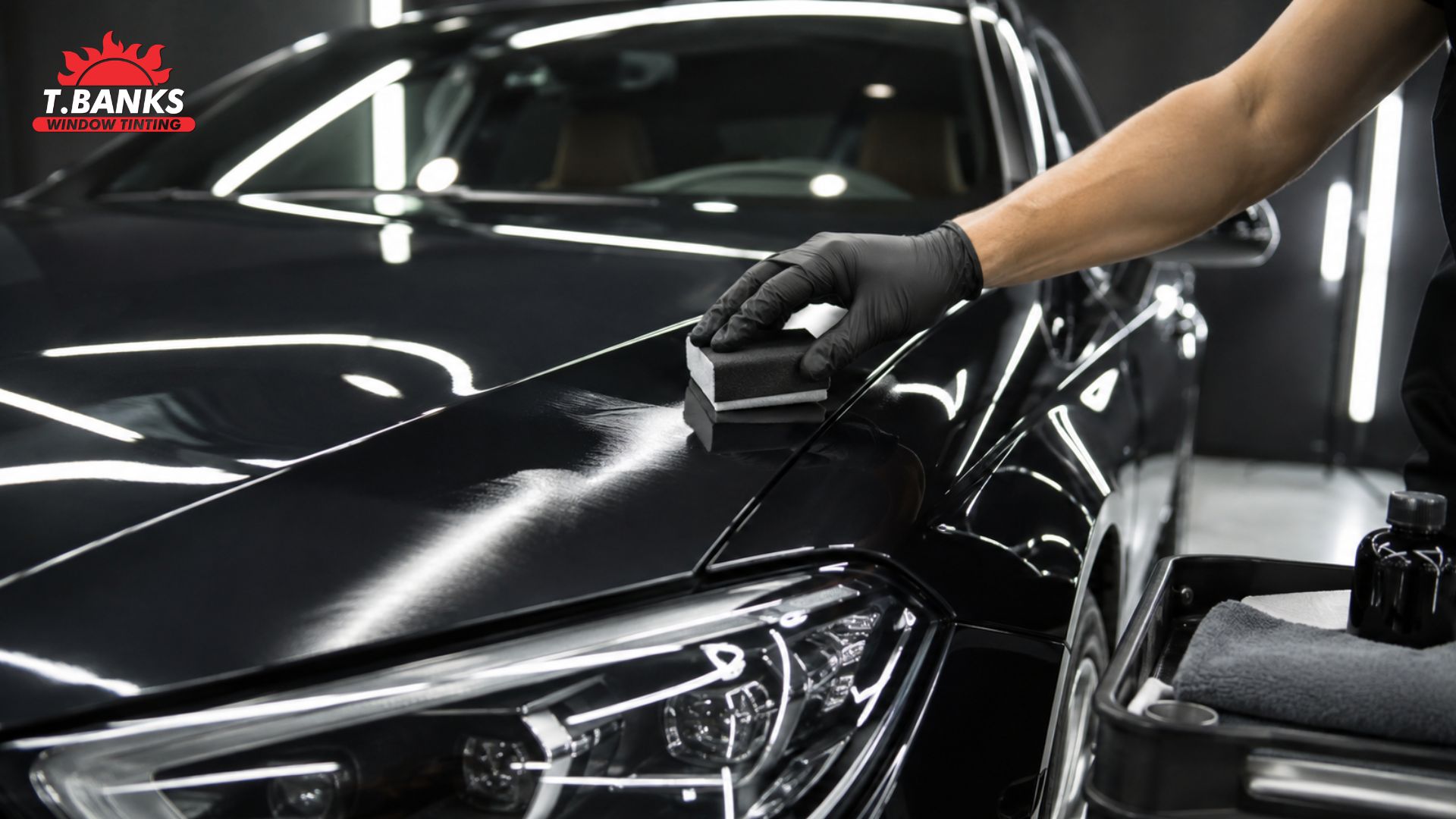
A careful ceramic coating application can significantly affect how securely the coating bonds to the paint and how consistently it performs over time. A premium coating cannot compensate for a surface that was poorly prepared before application.
Professional installation involves considerably more than spreading a liquid product across clean-looking paint:
- Inspect the paint: Identify existing defects, contamination, and areas requiring additional attention.
- Wash and decontaminate: Remove dirt plus bonded contaminants that routine washing may leave behind.
- Correct the paint when appropriate: Address swirl marks and other correctable defects before coating the surface.
- Prepare the surface: Remove polishing oils and residues that could interfere with bonding.
- Apply and level the coating: Work methodically to achieve consistent coverage without leaving high spots or uneven areas.
- Allow proper curing: Give the coating the conditions and time required to establish its protective properties.
The paint preparation stages are particularly important because transparent coating does not hide poor work underneath it. Residual oils, bonded contamination, or incomplete cleaning can compromise adhesion before the coating has even had a chance to perform.
At T. Banks Window Tinting, our approach to professional ceramic coating puts significant emphasis on preparation and controlled application. Proper ceramic coating installation is a process, not a quick wipe-on treatment, and getting those early stages right gives the coating a much better foundation for long-term performance.
Can Poor Maintenance Shorten Ceramic Coating Lifespan?
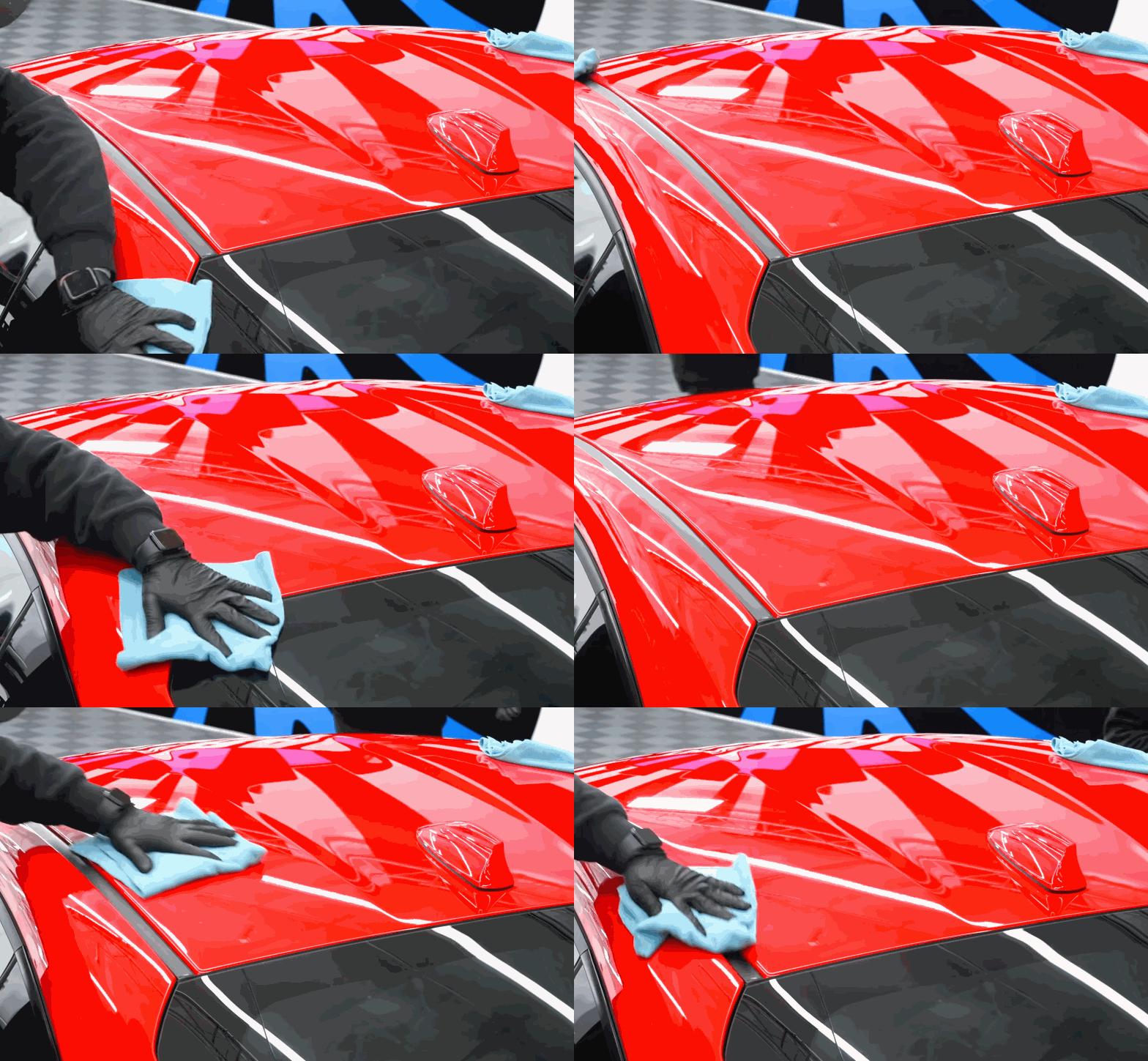
Yes, poor maintenance can shorten effective ceramic coating performance, even when the coating has not completely disappeared from the paint. Repeatedly using abrasive washing methods or allowing contamination to accumulate can gradually interfere with the qualities owners expect from a coated surface.
Brush-style automatic car washes are a common concern because repeated physical abrasion can introduce wear and surface marring. Dirty wash mitts and drying towels create a similar problem by dragging trapped particles across the finish. Harsh chemicals that are not appropriate for coated surfaces can also affect performance unnecessarily.
Neglect creates a different kind of problem. Bird droppings, insect residue, mineral-rich water spots, pollen, and other contamination should not be allowed to remain indefinitely simply because the vehicle has a coating. Some contaminants can become increasingly stubborn with time, while accumulated road film can mask the coating’s slickness and hydrophobic behavior.
Good ceramic coating maintenance does not have to make vehicle ownership complicated. In many ways, one of the advantages of coating is that routine cleaning becomes easier. But low-maintenance and maintenance-free are not the same thing. Consistent ceramic coating care, safe washing, and timely contaminant removal are still necessary if you want to maintain ceramic coating performance for as long as reasonably possible.
How Can You Make Ceramic Coating Last Longer in Georgia?
Consistent, coating-safe maintenance is the most practical way to extend ceramic coating lifespan under Georgia driving conditions. The goal is not to constantly work on the coating, but to keep its surface clean and avoid maintenance methods that create unnecessary wear.
A few habits make the biggest difference:
- Wash regularly with coating-safe products. Use proper automotive shampoo and clean wash media rather than waiting for layers of grime to accumulate.
- Remove contaminants promptly. Bug residue, bird droppings, tree sap, and similar deposits are easier to address before they have been sitting in Georgia heat for days.
- Dry carefully. Clean microfiber towels or safe drying methods help prevent water spotting and unnecessary contact with the finish.
- Choose compatible maintenance products. Not every wax, polish, cleaner, or detailing spray belongs on a coated vehicle.
- Have the coating inspected periodically. A professional can evaluate its condition and identify contamination or areas that may need additional attention.
Outdoor vehicles in Martinez may need a little more attention during heavy pollen periods. The same applies after frequent highway travel around the Augusta area, when insects and road film can build up quickly across the front end.
At T. Banks Window Tinting, we can inspect coating condition and recommend ceramic coating maintenance based on what the surface actually needs. There is no benefit in overcomplicating maintenance. Consistent care is what supports long-term paint protection and helps owners get more useful life from their coating.
Does Reduced Water Beading Mean Ceramic Coating Has Worn Off?
Reduced water beading does not automatically mean ceramic coating has worn away. Contamination sitting on top of an otherwise functional coating can temporarily change how water behaves across the surface.
Mineral deposits are a common example. Road film, pollen, oils, and other residue can also create a layer over the coating that reduces its apparent slickness and hydrophobic response. At that point, you’re seeing water interact with the contamination rather than necessarily seeing the true condition of the coating underneath.
Proper washing may be enough in mild cases. More stubborn buildup can require appropriate coating decontamination to restore a cleaner surface. When the underlying protection is still healthy, some of the expected ceramic coating hydrophobic properties may return once that buildup is removed.
This is why we would not judge ceramic coating performance from one weak round of water beading alone. If cleaning and decontamination do not improve the behavior, a professional inspection can help determine whether the problem is surface contamination or genuine deterioration of the coating.
When Does Ceramic Coating Need to Be Reapplied?
Ceramic coating should be considered for reapplication when its protective performance has meaningfully declined, not simply because a predetermined number of years has passed. The actual condition is more useful than treating the calendar as an automatic replacement schedule.
Look for Consistent Changes Across the Surface
A persistent loss of hydrophobic behavior after proper cleaning and decontamination can be one indication. Reduced slickness, noticeably uneven water behavior, or sections that no longer respond like the rest of the vehicle can also suggest that ceramic coating protection is weakening.
Wear does not always occur uniformly. The hood, roof, trunk, and other highly exposed panels may spend far more time facing sun, weather, and contamination than protected vertical surfaces. That can create differences in performance across the same vehicle.
A proper ceramic coating reapplication should therefore be based on the condition of the existing protection and paint. Since ceramic coating lifespan varies with exposure and maintenance, two vehicles coated at the same time do not necessarily need to be recoated at the same time.
Conclusion: Get More Life From Your Ceramic Coating
Ceramic coating lifespan is determined by the entire protection system, including coating quality, paint preparation, professional application, environmental exposure, and maintenance. An advertised durability figure can provide a useful reference, but it cannot account for everything a particular vehicle will experience.
That distinction is especially relevant in Martinez. Georgia sun, pollen, insects, rain, outdoor parking, and frequent mileage can all influence how a coating ages. Starting with properly prepared paint and the appropriate product gives the protection a strong foundation, while sensible maintenance helps preserve its performance afterward.
At T. Banks Window Tinting, our professional ceramic coating services focus on both sides of that equation. We want the surface prepared correctly before the ceramic coating application, and we want owners to understand how to care for it once the vehicle returns to normal use.
If you’re considering ceramic coating in Martinez, GA, contact us to have your vehicle evaluated and talk through your protection goals. We can help determine the right ceramic coating application for your paint, driving habits, and expectations for long-term ownership.
T. Banks window tinting address
4.8 ⭐⭐⭐⭐⭐ 268 Google reviews Window tinting service in Martinez, Georgia